Planning a traditional wedding in Dharmasthala? See the venue, catering, ritual, and accommodation services and facilities you need for a smooth celebration.
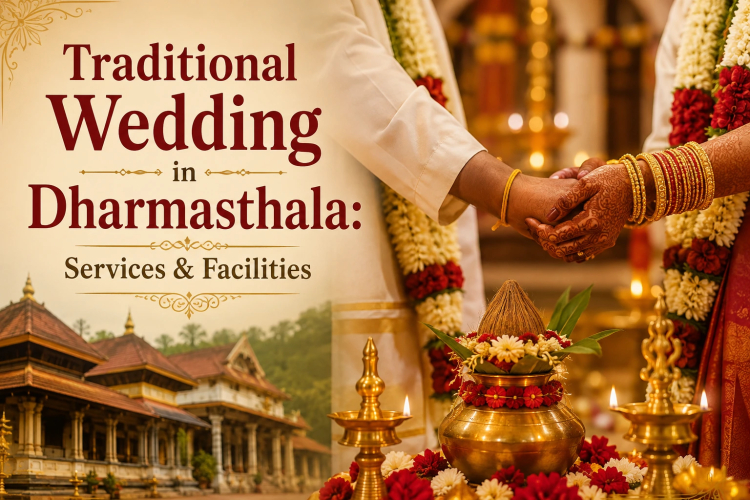
Planning a traditional wedding in Dharmasthala means arranging a venue with dining and parking, a purohit for the rituals, vegetarian catering, decoration, photography, and accommodation for guests, ideally starting 3 to 6 months ahead. Dharmasthala's halls are limited, so venue and room booking should happen together, early, before other vendors are confirmed.
Dharmasthala draws thousands of families each year who want their wedding blessed at Shri Kshetra Dharmasthala, one of Karnataka's oldest and most revered temples. Many couples choose to combine temple darshan with a full wedding celebration rather than a brief ceremony alone, and that decision brings a longer list of things to arrange: a venue, rituals, food, decoration, photography, and rooms for family travelling from across Karnataka and beyond. Wedding services in Dharmasthala have grown to match this demand, but planning still works best in order, venue and dates first, everything else after. This guide walks through exactly what to arrange, and what to check before booking each service.
Why Choose Dharmasthala for a Traditional Wedding?
Shri Kshetra Dharmasthala has stood for roughly eight centuries as a rare shared institution: a Hindu temple dedicated to Lord Manjunatha, administered by a Jain family, the Heggades, with poojas conducted by Vaishnava priests. Karnataka Tourism's own listing for Dharmasthala and the temple's broader history both cover this background in more detail for couples curious about the destination itself. Families travelling from across Karnataka and beyond choose a temple wedding in Dharmasthala specifically to have the marriage blessed at this shrine, then take darshan as newlyweds once the ceremony is complete. Dharmasthala also draws couples for a practical reason: it already has the infrastructure a wedding needs built around a temple town, halls, restaurants, and accommodation exist specifically to support these celebrations. It is worth understanding the difference between a short ritual-and-darshan booking and a complete Dharmasthala wedding with a hall, catering, and guests staying overnight, since the planning here is built for the latter. A closer look at why Dharmasthala suits temple weddings specifically covers this in more depth.
Start With Your Wedding Date and Guest List
Every other decision in wedding planning in Dharmasthala follows from three things: date, guest count, and budget. Most families finalise the wedding date with input from a family priest, working around auspicious muhurtham windows, and it helps to shortlist two or three possible dates before checking hall availability, since Dharmasthala's most in-demand dates get booked months ahead. Guest count is worth estimating separately for the ceremony itself and for a reception if one is planned, since some families invite far more people to a reception than to the ritual portion. Guests travelling from outside Dharmasthala add another variable, since they will need rooms, a seat at the ceremony. Settling an approximate budget early, even a rough range, makes every later conversation with a venue, caterer, or decorator faster.
Choose the Right Wedding Venue in Dharmasthala
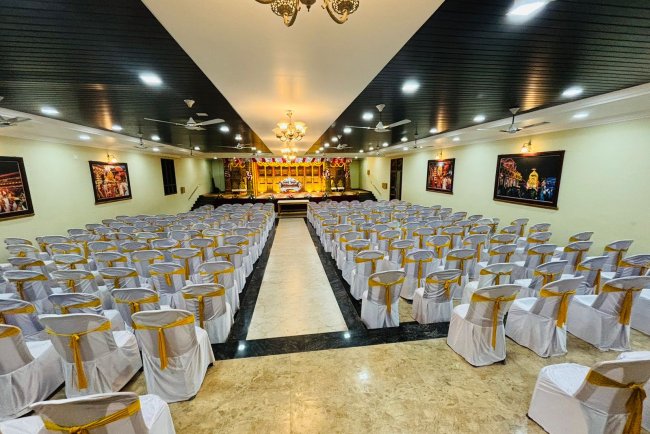
A wedding venue in Dharmasthala needs to work for two different moments: the ceremony itself, which usually follows a fixed ritual sequence, and everything around it, seating guests, serving food, and managing the flow of people. Guest capacity is the first filter, since a hall built for 100 will feel cramped at 250, and a hall built for 500 will feel empty at 80. Location and accessibility matter almost as much: how far the hall is from the temple, and how easily elderly guests and small children can move around the space. Confirm seating arrangements, stage and mandap space for the rituals, dining arrangements, and parking, since a Dharmasthala wedding venue can get very busy on weekends and auspicious dates. Indoor venues protect against Karnataka's monsoon season; open or semi-open venues suit the cooler months better. Finally, confirm whether the hall can host both the ritual portion and a reception, since moving venues mid-celebration adds real logistical strain. For a sense of typical hall sizes and costs across Dharmasthala more broadly, this breakdown of marriage hall cost and booking procedure is a useful starting reference, alongside budget-friendly hall options if cost is the main constraint.
What to Check Before Booking a Wedding Venue
● Capacity matched to your actual guest count, not just what's available.
● Availability for your shortlisted dates, with a backup date confirmed.
● A dedicated dining area, or a clear plan for where guests will eat.
● What decoration is included versus arranged separately.
● Power backup, since supply can be affected during peak season.
● Parking capacity for the number of guests arriving by vehicle.
● Clean, sufficient restroom facilities for the expected guest count.
● Guest accommodation within a reasonable distance.
● Whether catering is provided in-house or must be arranged separately.
● Distance from the temple and from where most guests are staying.
Arrange Traditional Wedding Rituals and Purohit Services
A purohit familiar with the specific rituals your family follows makes a genuine difference to how the ceremony runs, since not every Dharmasthala wedding follows exactly the same sequence; customs vary by community and by family tradition. Common elements many families include are a Ganapathi puja before the main ceremony, the muhurtham itself timed to an auspicious window, and rituals around the mangalsutra and saptapadi, but these should be confirmed with your own priest and family rather than assumed. Coordinating the muhurtham timing with the venue and with your photographer matters more than it might seem, since a ceremony running even slightly behind schedule can compress everything that follows. Pooja materials, flowers, and specific ritual items are usually arranged in advance either by the family or coordinated through the venue, and confirming who is responsible for what avoids a last-minute scramble. Both families should also align on customs beforehand, particularly if the bride and groom's families follow different regional traditions.
Plan Mandap and Wedding Decorations
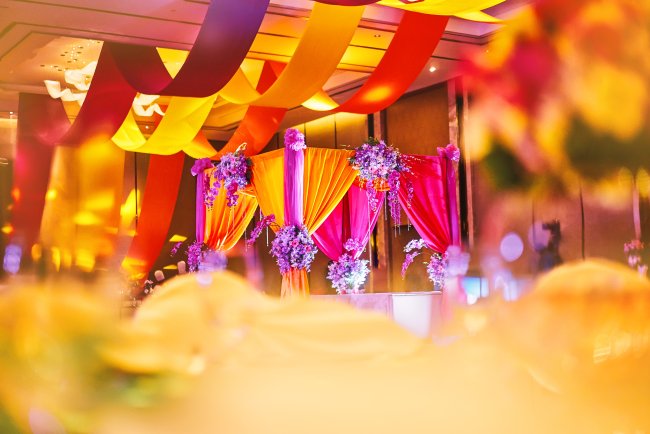
Traditional mandap decoration in Dharmasthala weddings typically draws on flowers, banana leaves, and lamps, elements with genuine ritual significance rather than purely decorative ones. Floral decoration extends beyond the mandap to the entrance, the stage or ceremony background, and guest seating areas, and a consistent colour theme across these spaces tends to look more deliberate than decoration chosen piece by piece. Lighting matters more than most families expect, particularly for evening functions or if photography and videography are planned. The goal worth keeping in mind through all of this: decoration should create a traditional atmosphere without crowding the space guests and rituals actually need to move through comfortably.
Select Catering and Traditional Wedding Food
Vegetarian catering is standard for most temple weddings in Dharmasthala, in keeping with the town's broader customs, and confirming this with your venue or caterer early avoids any confusion. A full wedding day typically needs planning across several meals, breakfast for early-arriving guests, lunch around the ceremony, evening snacks, and dinner if the celebration runs into the evening, and each has different serving and staffing needs. Traditional South Indian dishes remain the expected standard at most Dharmasthala weddings, though menus can be adjusted for guest preferences within that framework. Special requirements for children and elderly guests, softer foods, smaller portions, less spice, are worth flagging to the caterer directly. Dining hall capacity and serving style should match your guest count and the venue's actual space, and food quantity planning based on a realistic guest count, not just the invited number, avoids both running short and over-ordering.
What Should You Ask Your Caterer?
● What exactly is included in the menu, and what counts as an upgrade.
● How many meals are covered: breakfast, lunch, snacks, dinner.
● Buffet or served seating, and how that affects staffing.
● How many serving staff will be present on the day.
● Whether special dietary requirements can be accommodated.
● Where guests will actually be seated to eat.
● Water and beverage arrangements, and whether they're included.
● Who handles cleanup once the meal service ends.
Arrange Photography and Videography
Traditional rituals move quickly and do not repeat, which makes documenting them properly a real priority. Most families book a mix of formal wedding photography, candid coverage of guests and unplanned moments, and dedicated ritual photography that specifically captures the ceremony sequence, alongside family portraits taken separately when there's less time pressure. Videography decisions, whether to book it at all and at what coverage level, should happen alongside photography rather than after, since some photographers and videographers coordinate as a team. Pre-wedding or post-wedding photography, if a couple wants it, is usually arranged as a separate booking from the wedding day itself. Confirm the photographer's schedule specifically around the muhurtham timing, and clarify deliverables, how many final photos, whether there's a printed album, how long video editing takes, before booking rather than after.
Consider Music and Traditional Wedding Entertainment
Traditional wedding music in Dharmasthala often includes nadaswaram and other classical instrumental arrangements suited to the ceremony's tone, and confirming a sound system that fits the venue's size avoids music that's either too quiet to notice or loud enough to interfere with the rituals themselves. Music timing should be coordinated directly with the ceremony schedule, since certain ritual moments traditionally call for specific music cues. If a reception is planned separately from the ceremony, entertainment there has more flexibility, though many families still keep the overall character of the celebration traditional rather than shifting tone sharply. Some venues in Dharmasthala have restrictions on sound levels or timing, particularly in the evening, so confirm this with your venue before booking entertainment.
Floral Arrangements and Other Wedding Services
Beyond the mandap itself, a Dharmasthala wedding typically draws on several supporting services: flower and garland arrangements for the couple and family, stage and entrance decoration, lighting, pooja-related arrangements, guest seating setup, and welcome arrangements for arriving guests. Coordinating these through a smaller number of reliable vendors, rather than booking each separately, tends to reduce the back-and-forth a family has to manage in the final weeks before the wedding, and is often where a venue's own vendor relationships earn their value.
Arrange Accommodation for Wedding Guests
Estimate the number of rooms needed based on your actual outstation guest count, not the full guest list, since many local guests will not need a room. Prioritise accommodation for elderly family members and immediate relatives closest to the venue and temple, since a long commute matters more for them than for younger guests. Proximity to both the temple and the wedding venue matters for the same reason: guests attending both darshan and the ceremony benefit from not travelling far between the two. Check-in and check-out timings should be confirmed against your wedding schedule, particularly if guests are arriving the day before or leaving the day after. Group accommodation, several rooms booked together, works better when confirmed as a block early rather than booked individually as availability allows. Food availability at the accommodation itself, and basic guest facilities, matter more during a multi-day wedding stay than a one-night visit, and Dharmasthala gets busy during peak periods, weekends, festival dates, and popular muhurthams, so advance booking during these windows matters more than usual. Hotel Parijatha Inn's rooms, a short distance from the wedding hall, are one option worth checking directly for availability alongside the venue booking.
Plan Transportation and Guest Management
Pickup and drop arrangements for outstation guests, from the nearest bus stand or the closest airport, reduce a genuine source of stress for guests unfamiliar with the area. Regular transportation between accommodation, the temple, and the wedding venue matters even if all three are relatively close, since guests, particularly elderly ones, should not be expected to walk unfamiliar routes repeatedly. Dedicated transport for elderly guests specifically, rather than assuming they'll manage with general guest transport, is worth arranging separately if numbers allow. Parking for guests arriving by their own vehicle needs a clear plan, since Dharmasthala's roads get congested during busy periods. Assigning one family member or a coordinator specifically to manage transportation keeps this from becoming everyone's problem and no one's responsibility, and a simple written itinerary shared with guests ahead of time answers most questions before they're asked. This complete guest management guide goes into more detail on managing a larger guest list end to end.
Create a Dharmasthala Wedding-Day Schedule
A typical Dharmasthala wedding day might run roughly as follows, though the actual schedule should be built around your family's customs, the venue's timings, and the muhurtham itself, not copied from a template.
Morning
● Guest breakfast
● Temple visit or blessing for the couple and close family
● Final wedding preparations
Wedding Ceremony
● Groom and bride's arrival
● Traditional ritual sequence
● Muhurtham at its designated time
● Blessings and family photographs
After the Ceremony
● Lunch service
● Guest interaction
● Further photography
● Reception, if planned
Building in some buffer time between each block, rather than scheduling back to back, tends to absorb the small delays that happen on almost every wedding day without derailing the rest of the schedule.
Dharmasthala Wedding Planning Checklist
● ☐ Fix wedding date
● ☐ Finalise guest list
● ☐ Set budget
● ☐ Book wedding venue
● ☐ Arrange purohit / ritual services
● ☐ Book accommodation
● ☐ Finalise catering
● ☐ Arrange decoration
● ☐ Book photographer / videographer
● ☐ Arrange flowers and garlands
● ☐ Organise traditional music
● ☐ Plan guest transportation
● ☐ Confirm parking
● ☐ Prepare wedding-day schedule
● ☐ Confirm all vendors before the wedding
How Early Should You Start Planning a Dharmasthala Wedding?
|
Timeline |
What to Handle |
|
3–6 months before |
Fix date, estimate guests, book venue, book accommodation, confirm major vendors |
|
1–3 months before |
Catering, decoration, photography, music, transportation |
|
2–4 weeks before |
Confirm vendors, finalise guest count, allocate rooms, prepare wedding-day schedule |
|
1 week before |
Final confirmations, guest communication, payment and document checks, emergency contact list |
How to Make Your Dharmasthala Wedding Comfortable for Guests
Clear communication about timings, sent ahead of time rather than announced on the day, is one of the simplest ways to reduce guest confusion. Convenient accommodation and transportation, covered earlier here, both feed directly into how comfortable guests feel across a multi-day event. Food and water availability throughout the day, not just at formal meal times, matters especially in Dharmasthala's climate. Seating specifically for elderly guests, and clean, sufficient restroom facilities, both address needs that are easy to overlook when a family is focused on the ceremony itself. Keeping the ceremony schedule organised, and communicated, prevents the drift that makes a wedding day feel chaotic even when nothing has actually gone wrong. Sharing basic temple, venue, and accommodation information with guests ahead of time, even a simple printed sheet, answers most logistics questions before they're asked.
Final Checklist Before the Wedding Day
In the final days before the wedding, verify every major booking once more: venue, accommodation, catering, decoration, photography, ritual arrangements, transportation, the final guest list, and all outstanding payments. Assigning one coordinator, a family member or someone hired specifically for this, to handle last-minute vendor confirmations frees the couple and immediate family to focus on the ceremony itself rather than fielding vendor calls on the wedding day.
Plan Your Traditional Wedding in Dharmasthala With the Right Services
A successful traditional wedding in Dharmasthala is rarely about any single decision done perfectly. It is the combination, venue, rituals, catering, decoration, photography, accommodation, and guest transportation, working together smoothly, that actually creates the experience families remember. Arranging the right wedding facilities in Dharmasthala early, in roughly the order this guide has covered, gives every other decision more room to go right.
A note on Parijatha Conventional Hall: it is a private wedding venue in Dharmasthala, not affiliated with or endorsed by the Dharmasthala Temple Trust or any official temple authority. Temple-managed marriage ceremonies at the temple's own Kalyana Mantapa halls are booked separately through the Dharmasthala temple office. Dharmasthala's temple trust also runs its own long-standing free mass-marriage programme as a separate social initiative, distinct from any private venue's own services.
Frequently Asked Questions
How far in advance should I book a wedding venue in Dharmasthala?
Most families book 3 to 6 months ahead, and 6 to 8 months ahead for the most in-demand dates, weekends, and popular muhurthams. Dharmasthala's halls are limited relative to demand, so early booking matters more here than in a larger city.
Is Dharmasthala only suitable for very traditional weddings?
Dharmasthala is best suited to families who want the ceremony itself rooted in traditional ritual and temple blessing, but the reception and surrounding celebration can be styled more flexibly. Decoration, catering, and entertainment choices all have room for a family's own preferences within that traditional core.
What is the difference between a temple ceremony and a full wedding celebration in Dharmasthala?
A temple ceremony can be a relatively brief ritual and darshan visit. A full wedding celebration adds a venue, catering for guests, decoration, photography, and often accommodation for family travelling from outside Dharmasthala, and needs the fuller planning this guide covers.
Do all Dharmasthala weddings follow the same rituals?
No. Rituals vary by community and family tradition, and common elements like a Ganapathi puja or the specific ceremony sequence should be confirmed with your own family priest rather than assumed to be identical across every wedding.
Can accommodation and the wedding venue be booked together?
In many cases, yes, and doing so simplifies logistics considerably. Confirm with your chosen venue whether they offer or can help coordinate nearby accommodation, since booking both together, or at least around the same time, is usually easier than arranging each separately later.
About the Author
Akhil Shetty
Akhil Shetty is the Managing Director of Hotel Parijatha INN, Dharmasthala.
Author profile: sridharmasthala.com/about-author
Reviewed by Chaithra SR,
Chaithra SR, SEO Executive at OneCity Technologies, Bangalore, with 5.5 years in digital marketing and experience across coastal Karnataka hospitality and education-sector campaigns. LinkedIn: linkedin.com/in/chaithra-sr-4133b0217
Planning your traditional wedding in Dharmasthala? Explore wedding services and facilities at Parijatha Inn to make your special day comfortable, well-organised, and memorable. Call or WhatsApp +91 87625 11122, or email booking@parijathainn.com.
What's Your Reaction?