Capture the most meaningful moments of a Dharmasthala wedding with this photography guide covering rituals, family moments, traditions, and essential shots.
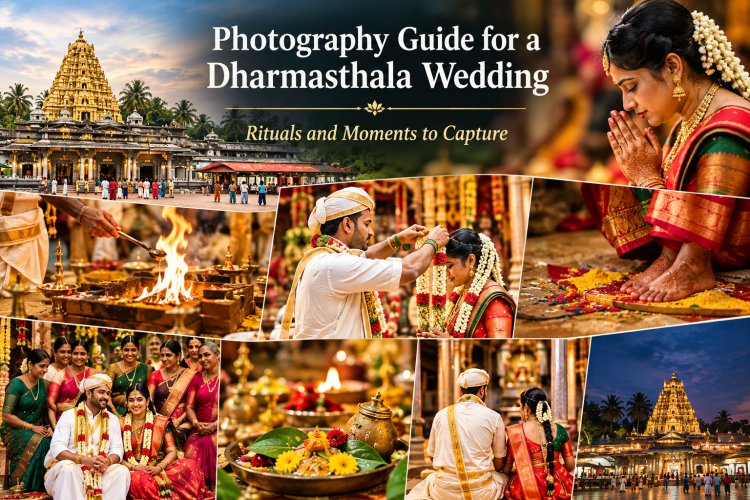
Good Dharmasthala wedding photography covers three things together: the traditional rituals themselves, candid emotional moments between family members, and the small details, attire, jewellery, decorations, that round out the full story of the day. The most useful preparation is discussing the ceremony schedule with your photographer beforehand, so they know which rituals matter most to your family and can document them without disrupting the ceremony itself.
A Dharmasthala wedding moves through a sequence of meaningful moments, family members arriving, rituals performed with real devotion, elders offering blessings, that a couple only gets to experience once. Good wedding photography in Dharmasthala doesn't just record that it happened; it holds onto the details that memory alone tends to blur over the years, an aunt's expression during a blessing, the exact way garlands were exchanged, a grandparent's hand resting on the couple's shoulder. There's a real difference between posed photographs, candid moments caught without staging, and ritual photography that documents a ceremony as it actually unfolds, and a well-planned wedding shoot in Dharmasthala usually needs all three, balanced rather than one dominating the day. Above everything else, photography at a traditional ceremony should complement what's happening, not interrupt it; a photographer working well in this setting is one guests barely notice until they see the photos afterward. This guide sets out what to capture, practical tips for working in a temple-town setting, and how families and photographers can plan together so nothing important gets missed.
Why Wedding Photography Matters in Dharmasthala
A wedding in Dharmasthala carries a particular kind of significance, family, tradition and, for many, real devotional meaning, all coming together in one day. Photographs preserve the rituals themselves, but they also preserve something harder to hold onto otherwise: the emotions on people's faces during a blessing, the specific way a family actually celebrates, not just a generic wedding album template. Years later, it's often the photograph of an elderly grandparent, someone who may not be there for future family milestones, that a family values most. Respecting temple and ceremony guidelines throughout matters here too; whatever else a photographer captures, working within the boundaries a family or temple sets isn't optional.
Before the Wedding: Moments Photographers Should Capture
● The bride and groom getting ready, separately, in the hours before the ceremony
● Traditional clothing, jewellery and accessories, ideally photographed before they're worn as well as on the day
● Wedding invitations and other personal details that carry sentimental value
● Parents and close family members in their own preparation moments
● Relatives arriving at the venue, particularly those travelling from out of town
● First family interactions and candid conversations as people gather
Important Rituals to Include in the Wedding Shot List
Thoughtful wedding rituals photography starts with discussing the ceremony schedule with your photographer well in advance; rituals often happen in quick succession, and a photographer who doesn't know what's coming next can easily miss a moment that only happens once. Common moments families choose to include:
● The bride and groom entering the ceremony
● Exchange of garlands, where this is part of the family's tradition
● Important moments involving parents and elders
● Sacred rituals and blessings specific to the ceremony
● Wedding vows or symbolic ceremonies, depending on family tradition
● Post-ceremony family blessings
It's worth being clear that these customs vary substantially from family to family and community to community; there's no single “correct” sequence that applies universally, which is exactly why sharing your own family's specific plan with the photographer beforehand matters more than following a generic checklist.
Family Moments That Should Not Be Missed
● Parents with the bride and groom
● Grandparents and elderly family members
● Siblings and cousins
● Group photographs with close relatives
● Different generations together in one frame
● Friends and extended family
● Candid interactions between relatives, not just posed lineups
Preparing a short family-photo list in advance, names, not just “close family” as a category, saves real time on the day and makes sure nobody important gets missed in the rush.
Candid Wedding Photography Ideas for Dharmasthala
Among the most valued Dharmasthala wedding photo ideas are the unposed, in-between moments that a family only realises they'll treasure once they see them:
● Natural conversations between family members, caught rather than staged
● Emotional reactions during rituals, which are often more genuine than any posed shot
● Laughter and interactions among relatives
● Children enjoying the wedding in their own way
● Behind-the-scenes preparation moments
● Guests meeting after a long time apart
● Quiet moments between the couple, away from the main crowd
Encouraging natural expressions rather than forcing every photograph tends to produce the images families actually treasure later, more than a wedding album full of stiff, posed formality.
Traditional Wedding Details Worth Photographing
● Wedding attire, from multiple angles and before it gets creased through the day
● Jewellery and accessories
● Flowers and garlands
● Ritual items specific to the ceremony
● Invitation cards
● Traditional decorations
● Gifts and ceremonial details
● Food or dining details, where appropriate to the family's wishes
Detail photographs round out the complete story of a wedding; a full album that's only faces and rituals, without the texture of the day itself, ends up feeling incomplete when a family looks back on it years later.
Photography Tips for a Traditional Dharmasthala Wedding
● Understand the ceremony schedule before the event, not on the day itself
● Arrive early to check the surroundings and available lighting
● Identify suitable locations for family portraits ahead of time
● Use natural light where appropriate, particularly for outdoor or open-air moments
● Carry backup batteries and memory cards; a temple-town setting doesn't offer convenient last-minute equipment shops
● Keep equipment organised and unobtrusive rather than bulky and attention-grabbing
● Avoid blocking guests or disrupting rituals to get a specific angle
● Follow photography restrictions wherever applicable, particularly around temple areas
● Coordinate directly with the family or ceremony organisers throughout the day
How to Prepare a Wedding Photography Checklist
A practical checklist, divided by phase of the day, keeps a shoot organised without needing to remember everything on the fly:
Before the ceremony: getting-ready photographs, family preparation, venue and decor details.
During the ceremony: the couple, the rituals themselves, parents and elders, guests.
After the ceremony: couple portraits, family groups, friends, candid celebration moments.
How Couples Can Coordinate With Their Photographer
● Share the wedding schedule in advance, not just the date and venue
● Tell the photographer which rituals are especially important to the family
● Provide the names of key family members who need to be photographed specifically
● Identify elderly relatives who should be included in group photographs
● Decide whether the couple prefers candid, traditional or documentary-style photography
● Discuss the expected delivery format and timeline before the wedding, not after
Common Wedding Photography Mistakes to Avoid
● Trying to photograph everything without any shot list at all
● Forgetting family group photographs in the rush of the day
● Not informing the photographer about which rituals matter most to the family
● Spending too much time on posed photographs at the expense of candid moments
● Overlooking elderly relatives and children in the overall coverage
● Arriving late and missing early preparation moments entirely
● Using excessive or bulky equipment in crowded ceremony spaces
● Disrupting a ritual's flow just to get a specific photograph
● Not keeping backup equipment on hand
A Simple Dharmasthala Wedding Photography Timeline
A general flow many families follow: before ceremony, getting ready, family portraits, guest arrival, wedding rituals, couple portraits, family group photos, candid celebrations. The actual schedule depends entirely on your family's specific ceremony plan, and photographers should keep some flexibility built in for unexpected moments that don't fit neatly into a planned timeline; some of the best photographs come from exactly those unplanned moments.
Frequently Asked Questions About Dharmasthala Wedding Photography
How far in advance should I discuss the photography plan with my photographer?
Sharing your ceremony schedule, key rituals and family photo list several weeks before the wedding gives a photographer enough time to prepare properly, rather than trying to understand the day's flow on the morning itself.
Are there photography restrictions to be aware of near Dharmasthala Temple?
Photography guidelines can apply around temple premises, so checking current restrictions directly and respecting them is important; these aren't something to assume based on a general idea of temple photography rules.
Should we prioritise candid or posed photography for a Dharmasthala wedding?
Most families find a balance works best: posed portraits for key family groupings, alongside candid coverage of rituals and interactions. Deciding your preference in advance helps the photographer plan their time across the day accordingly.
What should be included in a family photo checklist?
Specific names of family members who need individual or group photographs, not just general categories like “close family,” along with any relatives who should be prioritised if time runs short later in the day.
How can photography avoid disrupting the wedding rituals themselves?
Understanding the ceremony schedule beforehand, using unobtrusive equipment, and coordinating directly with family or ceremony organisers all help a photographer document rituals without interrupting their natural flow.
Conclusion
A thoughtful Dharmasthala wedding photography plan brings together the rituals, the candid family moments, and the small details that together tell the complete story of the day, none of which happens by accident; it comes from planning discussed with your photographer well in advance, a clear shot list, and enough flexibility to let truly unplanned moments happen too. Once your photography plan is in place, the next step is organising the wedding arrangements, guest requirements and venue details themselves. Explore the Marriage Hall Booking in Dharmasthala page to understand available facilities and plan your function more comfortably.
About the Author
Akhil Shetty serves as the Managing Director of Hotel Parijatha Inn, Dharmasthala. More about the author
Reviewed by L K Monu Borkala, Chief Strategist, OneCity Technologies`with 20+ years of SEO experience and over 650 client campaigns across India and UAE, overseeing content strategy and editorial compliance at OneCity Technologies. LinkedIn: linkedin.com/in/monuborkala
What's Your Reaction?