Compare traditional Hindu wedding venues with city banquet halls. Discover why Dharmasthala's Parijatha Conventional Hall is Karnataka's top choice for temple weddings
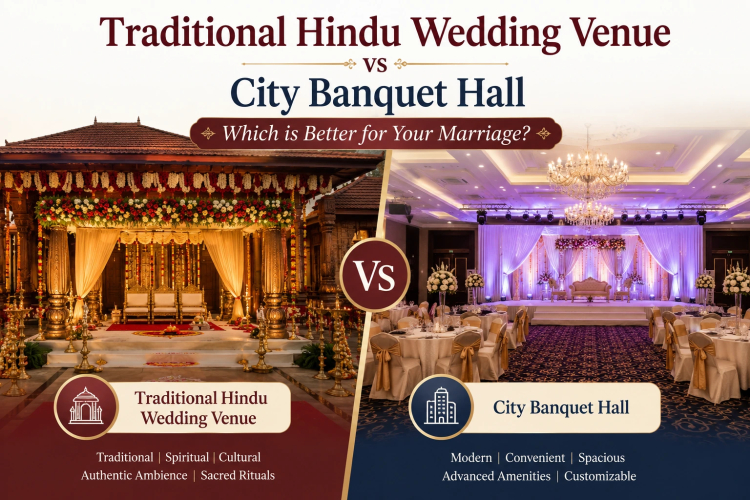
The venue sets the tone for everything that follows. For South Indian Hindu families, particularly those in Karnataka and coastal Dakshina Kannada, this choice carries weight far beyond logistics: it determines whether the wedding will be a spiritually anchored ceremony steeped in Vedic tradition, or a well-organised urban event oriented around convenience and scale.
Both traditional Hindu wedding venues and city banquet halls serve their purpose — but they serve very different couples, priorities, and visions of what a marriage ceremony should be. This guide compares them directly, covers what families in Karnataka consistently report about their experience with each, and explains why Dharmasthala continues to draw couples seeking a traditional Hindu wedding that carries genuine spiritual meaning.
Understanding Traditional Hindu Wedding Venues
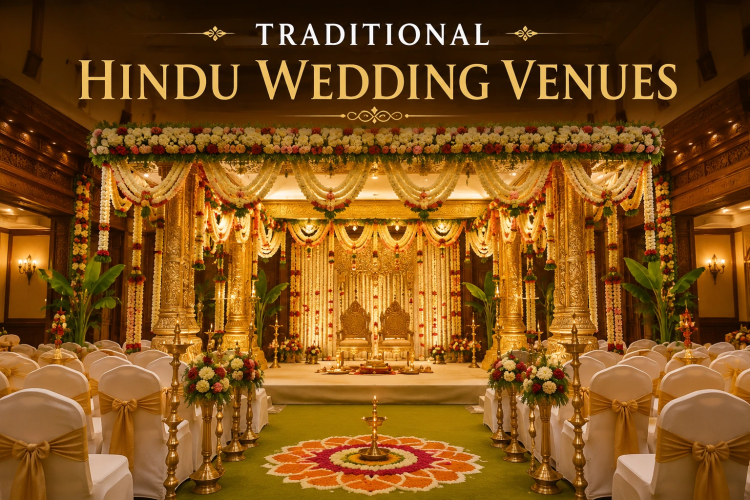
A traditional Hindu wedding venue — whether a temple-adjacent kalyana mantapa, a dharamshala hall, or a heritage marriage complex — is built around the requirements of the Vedic ceremony, not the preferences of a catering vendor. The physical space, the rituals it supports, and the atmosphere it creates are inseparable from the ceremony's meaning.
Temple-Based and Kalyana Mantapa Settings
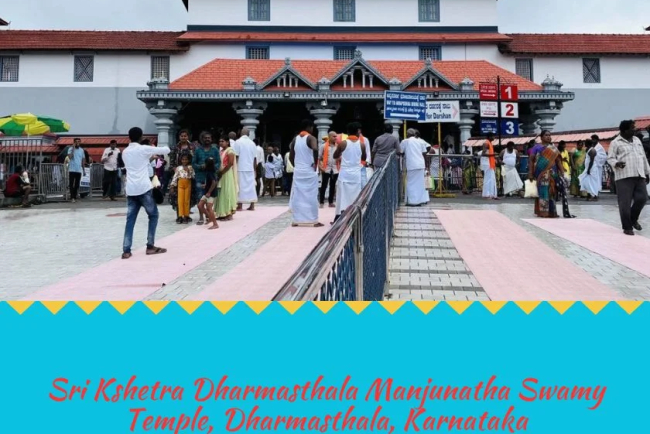
Kalyana mantapas — traditional Hindu marriage halls — are typically located near temples or pilgrimage centres, positioned to connect the wedding ceremony with the spiritual energy of a sacred site. In Dharmasthala, Karnataka's most revered pilgrimage centre, the Parijatha Conventional Hall sits 2 km from the Shri Kshetra Manjunatheshwara Temple — close enough for newlyweds to seek Lord Manjunatheshwara's blessings on their wedding day itself, a tradition that carries deep significance for Tulu and Kannada Hindu families.
Vedic Rituals and the Role of the Purohit
Traditional Hindu wedding venues are structured around the ceremony's ritual requirements: a proper sacred fire space (homakunda), sufficient room for the sapta padi (seven steps), appropriate acoustics for Vedic chanting, and the availability of a trained purohit who understands regional customs. Parijatha Conventional Hall provides a resident purohit and valaga facilities for every booking — a meaningful practical difference from city venues where families must source and transport their own priests.
Spiritual Atmosphere and Family Experience
The atmosphere of a traditional wedding venue is shaped by its location and purpose. Dharmasthala's setting — no city noise, no commercial clutter, a landscape associated with 800 years of dharmic practice — creates the kind of meditative calm that city venues cannot manufacture through décor alone. Elders travel comfortably. Guests combine the wedding trip with a darshan at the temple. The entire occasion becomes a family pilgrimage, a ceremony.
What Is a City Banquet Hall Wedding?
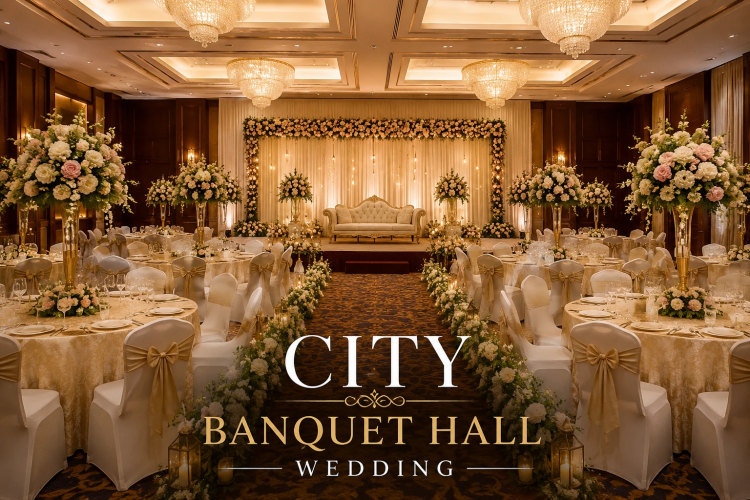
City banquet halls have become the default wedding venue for urban Indian couples over the past two decades. They offer what traditional venues rarely can: large air-conditioned spaces, flexible décor to suit any theme, centralised catering, proximity to hotels, and accessibility for guests travelling from multiple cities. For couples whose wedding guest list is built around professional networks as much as family, the banquet hall's conveniences are real.
What City Banquet Halls Offer
• Air-conditioned indoor spaces: Suitable for Bangalore and other hot-weather urban weddings, particularly for receptions with large guest counts
• Flexible décor and themes: Stage sets, lighting rigs, and vendor access allow any visual style from traditional mandap to destination-wedding aesthetics
• Catering packages: Most city halls include in-house catering or have approved vendor lists, reducing coordination effort for large guest counts
• Urban accessibility: City-based guests — the majority for many urban families — face no travel commitment beyond commuting across town
• Hotel proximity: Accommodation for outstation guests is typically available nearby, reducing the coordination required for multi-day wedding programmes
Key Differences Between Hindu Wedding Venues and Banquet Halls
The difference between a traditional kalyana mantapa and a city banquet hall is not simply aesthetic — it reflects a fundamentally different understanding of what a wedding is for. Here is a direct comparison across the factors families most frequently weigh:
|
Factor |
Traditional Hindu Venue (Kalyana Mantapa) |
City Banquet Hall |
|
Primary priority |
Vedic ritual, spiritual blessing, family tradition |
Convenience, scale, aesthetic flexibility |
|
Ritual infrastructure |
Built-in: homakunda, purohit, valaga, sacred space |
Requires external sourcing — priest, ritual equipment |
|
Atmosphere |
Spiritual, peaceful, temple-adjacent |
Event-format: stage-lit, décor-dependent |
|
Cost structure |
Typically lower; hall fees without commercial overhead |
Higher — premium city rates, catering minimums, décor packages |
|
Guest experience |
Pilgrimage feel; elders comfortable; darshan possible |
Urban event; depends on production quality |
|
Photography |
Natural light, sacred backdrop, authentic ritual shots |
Production lighting, styled décor, theme-matching |
|
Food |
Traditional sadhya or regional vegetarian spreads |
Customisable; multi-cuisine options available |
|
Vendor flexibility |
Traditional; external vendors require coordination |
High; in-house vendors or open vendor policy |
|
Guest travel requirement |
Outstation travel — typically combined with pilgrimage |
Minimal for city-based guests |
Why Dharmasthala Is Ideal for Traditional Hindu Weddings
Dharmasthala is not simply a wedding destination — it is one of Karnataka's most significant pilgrimage centres, and has been for over 800 years. Shri Kshetra Dharmasthala's Manjunatheshwara Temple draws millions of devotees annually, and for Hindu families from Dakshina Kannada, Udupi, and across coastal Karnataka, a marriage solemnised near Dharmasthala carries a sanctity that city venues cannot replicate.
Temple Blessings on the Wedding Day
Parijatha Conventional Hall is positioned 2 km from the Dharmasthala temple gate — a 25-minute walk or a short auto ride. Many couples seek Lord Manjunatheshwara's blessings on the morning of their wedding day, or immediately after the ceremony. This combination of the marriage ritual and temple darshan in a single day is deeply meaningful for Tulu and Kannada Hindu families, and it is something no city banquet hall can offer.
Peaceful, Non-Urban Environment
City weddings carry the ambient noise and pressure of urban logistics. Dharmasthala offers the opposite: a clean, quiet pilgrim town where the pace of the day matches the gravity of the occasion. Elders find the travel meaningful rather than burdensome. Children experience the spiritual dimension of the occasion. Outstation guests turn the trip into a family pilgrimage — consistently reported by families as one of the most valued aspects of a Dharmasthala wedding.
Cultural Significance for Karnataka Families
Best wedding venues in Karnataka for traditional Hindu ceremonies are consistently those that carry cultural weight beyond the occasion itself. Dharmasthala carries that weight. A wedding held here is a well-managed event — it is a ceremony that will be spoken of as a family memory for generations, defined by the place as much as the ritual.
Marriage Hall Booking in Dharmasthala — What You Should Know
Parijatha Conventional Hall offers five hall configurations to accommodate different ceremony sizes, from intimate family weddings to larger community gatherings. All bookings include purohit and valaga facilities, air conditioning, free parking, power backup, audio-visual setup, and a 100% pure vegetarian restaurant (Parijatha Veg) on-site.
|
Hall Configuration |
Guest Capacity |
Suitable For |
|
Intimate Hall |
50 guests |
Close-family ceremonies, simple traditional rituals |
|
Mid-Size Hall A |
100 guests |
Joint family weddings, two halls available at this capacity |
|
Mid-Size Hall B |
100 guests |
Joint family weddings — second 100-guest hall option |
|
Larger Hall |
150 guests |
Family gatherings with community attendance, receptions |
|
Full Hall |
250 guests |
Group marriages, community events, large receptions |
How to Book Parijatha Conventional Hall
• Direct booking: No agents, no portals — contact the hall directly via WhatsApp or call
• Confirmation: Managed by Jothi K — availability confirmed within 2–4 hours of enquiry
• Website: Full hall details, capacity information, and booking enquiry at sridharmasthala.com
• Accommodation: Wedding guest accommodation available at Hotel Parijatha INN — book in parallel with the hall for out-of-town families
• Best time to book: Dharmasthala wedding dates — particularly auspicious muhurtha dates — fill early. Book the hall 3–6 months in advance for peak wedding season months (October–February)
Visit Parijatha Conventional Hall directly or contact the management to check availability, pricing, and booking details for your event at this trusted marriage hall in Dharmasthala.
|
Affordable marriage hall booking in Dharmasthala Parijatha Conventional Hall offers one of the most cost-effective traditional Hindu wedding venue options in Karnataka. Hall rates are significantly lower than comparable city banquet halls in Mangalore or Bangalore — and the included purohit facilities, parking, and power backup eliminate the additional costs that make city venues more expensive than their quoted rates suggest. |
Which Wedding Venue Should You Choose?
The honest answer depends on what the couple and their families value most. Both venue types have genuine strengths. The decision framework below helps families identify which choice aligns with their priorities:
Choose a Traditional Hindu Venue If:
• Vedic rituals and family customs are the non-negotiable centre of the occasion
• Spiritual significance and a temple blessing are meaningful to the couple or their families
• The guest list is primarily family — elders and close relatives for whom the pilgrimage aspect adds value
• Budget is a priority and the couple wants quality without commercial venue pricing
• A calm, authentic setting matters more than production-level event aesthetics
Choose a City Banquet Hall If:
• The primary guest base is urban — colleagues, professional networks, city-based family
• A large or multi-day wedding programme requires the infrastructure only city venues provide
• The couple wants a customised visual theme or destination-style aesthetic
• Outstation guests for whom travel to a pilgrimage town is not practical or desired
• Multi-cuisine catering or specific dietary requirements for a diverse guest list
Hybrid Weddings — The Best of Both
Many Karnataka families now structure their wedding around two events: a traditional Vedic ceremony at a kalyana mantapa in Dharmasthala or another temple town — intimate, ritually complete, spiritually grounded — followed by a larger reception in the couple's city for professional networks and urban family who cannot travel. This arrangement honours the ritual core of the ceremony while accommodating the practical realities of modern families.
Final Thoughts – Balancing Tradition with Modern Needs
The most regretted wedding decision, consistently reported by families who chose convenience over tradition, is not having held the ceremony in a place of genuine spiritual significance. The production quality of a city banquet hall fades in memory. The experience of being married near Dharmasthala's Manjunatheshwara Temple — of seeking the Lord's blessings on the day itself, of the family gathering in a place of 800 years of dharmic significance — does not.
Traditional marriage hall Dharmasthala at Parijatha Conventional Hall represents a specific and increasingly rare combination: a fully equipped, affordable, professionally managed kalyana mantapa that places couples within 2 km of one of Karnataka's most sacred temples. For families who value that combination, there is no city venue that offers an equivalent.
Book early — auspicious muhurtha dates, particularly in the October to February wedding season, fill months in advance. The earlier the booking, the more choice remains in hall configuration and date selection.
|
Book Your Dharmasthala Wedding at Parijatha Conventional Hall 5 hall configurations from 50 to 250 guests. Purohit and valaga provided. 2 km from Shri Kshetra Dharmasthala Temple. Air conditioning, power backup, free parking, and 100% vegetarian dining on-site. Managed by Jothi K — availability confirmed within 2–4 hours.
|
What's Your Reaction?