History of Dharmasthala Temple | Origins, Legacy & Room Booking Guide
Discover the history of Dharmasthala, its 800-year-old traditions, the Heggade legacy, and a guide to room booking near the Dharmasthala temple.
Introduction: The Timeless Spirit of Dharmasthala
Dharmasthala is more than a pilgrimage spot it’s an 800-year continuum of service, faith, and cultural harmony. Its history of dharmasthala reflects centuries of faith, charity, and cultural unity. What makes this temple town unique is its living balance between Hindu worship of Lord Manjunatha and the Jain tradition of the Heggade family, who steward the town’s dharmic institutions. This harmony has drawn generations of devotees seeking blessings and meaningful seva.
Today, Dharmasthala preserves its timeless spirit while embracing well-managed facilities for travellers. Thoughtful infrastructure, orderly darshan, and community services ensure a comfortable visit for families and senior pilgrims. At the same time, the town's hospitality has evolved with digital convenience pilgrims can plan their stay with dharmasthala room booking near the temple, make accommodation bookings in advance, or complete dharmasthala room booking online through trusted channels. https://sridharmasthala.com/
This article traces the journey from legend to living heritage origins, guardianship, architecture, festivals, and the modern experience so first-time visitors and long-time devotees can understand how an ancient seat of dharma became a modern-day temple town without losing its soul.
Origins of Dharmasthala – Where Legends Begin
According to cherished lore, the Dharma Daivas Kalarahu, Kalarkayi, Kumaraswamy, and Kanyakumari arrived in disguise at the home of the Jain chieftain Birmanna Pergade and his wife Ammu Ballalthi at Nelyadi Beedu. Moved by their humility and hospitality, the deities revealed themselves and instructed the couple to dedicate their home to the service of dharma and establish a public shrine. Pergade obeyed, and following divine guidance, a Shiva Linga of Lord Manjunatha was installed, beginning Shaiva worship under Jain guardianship. Tradition also holds that the installation received blessings from the preceptors of Kadri, sealing a distinctive harmony of faiths.
The origins of Dharmasthala are preserved through oral narratives, regional stone inscriptions, palm-leaf chronicles, and temple records curated by successive trustees. Across sources, three themes recur: charity, truth, and hospitality (atithi devo bhava). In this light, the history of Dharmasthala is less a royal proclamation and more a household promise that grew into a public trust, setting the model for centuries of service to devotees and the wider community.
Learn more about Dharmasthala Temple timings & pooja details.
The Heggade Legacy: Guardians of Dharma
From the first vow at Nelyadi Beedu, stewardship of Dharmasthala has rested with the Heggade family for over eight centuries. As hereditary Dharmadhikaris, they preserved the shrine’s unique synthesis of Hindu worship of Lord Manjunatha under Jain trusteeship while expanding its service to society. Under the leadership of the present Dharmadhikari, Dr D. Veerendra Heggade, initiatives blossomed across education, health, livelihood, and culture: the SDM group of institutions, community health programmes, rural development and self-employment training, mass weddings, the Manjusha museums, and the revival of classical arts through annual festivals.
Inside the pilgrimage ecosystem, systems for Annadana, disciplined darshan, queues, and information centres reflect a commitment to dignity and order. Dharmasthala temple near room booking and facilities have evolved under the Heggade family’s vision for devotees’ comfort. Digital portals, guest houses, and transparent allocation make planning easier for families, senior citizens, and group yatras.
Yet the core remains unchanged a vow to protect dharma through compassion, truth, and service. By linking spiritual duty with public welfare, the Heggades ensured that the history of Dharmasthala is remembered and lived daily in classrooms, kitchens, queues, and quiet prayers.
Temple Architecture and Sacred Icons
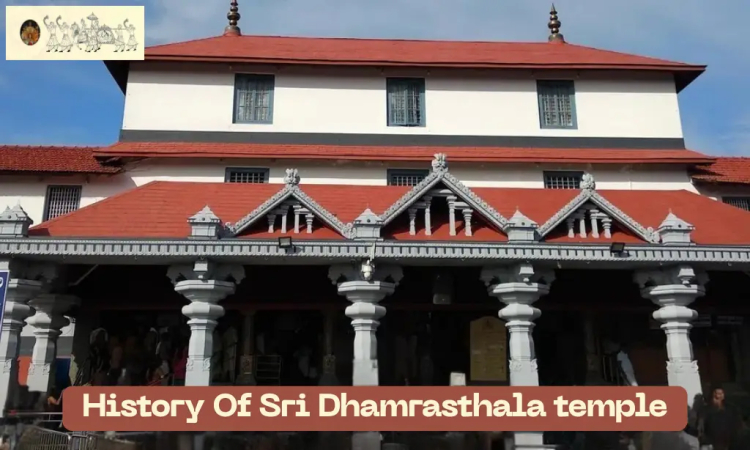
Set amid the green slopes of coastal Karnataka, the Manjunatha Temple marries vernacular coastal forms with classical Dravidian elements. Granite plinths, laterite courses, timber corridors, and sloping tiled roofs answer the heavy monsoon, while the garbhagriha and mukha-mantapa follow orthodox shrine geometry. At the core rests a smooth black Shiva Linga, worshipped as Sri Manjunatha Swamy, whose aniconic presence is adorned with bilva leaves, abhisheka, and deepa-aradhane through the day. The precinct also honours the Dharma Daivas, preserving the founding vow of service and justice.
Jain influences appear in the shrine’s stewardship, the restrained ornamental programme, and the nearby monolithic image of Bahubali on Ratnagiri, an emblem of renunciation complementing Shaiva devotion. In spirit and form, the historical temple of Dharmasthala is a blend of ancient craftsmanship and sacred design, where architecture quietly serves worship, order, and community.
Evolution Through Centuries: Dharmasthala in Modern Times
Across the ages, Dharmasthala has steadily moved from a forested shrine to a well-organised temple town without loosening its anchor in dharma. Community service scaled alongside daily devotion, Annadana, rural livelihood programs, education and health initiatives, turning faith into structured welfare. Cultural life flourishes through music, dance, and the spectacular Laksha Deepotsava, when a million lamps illumine streets and shrines, renewing the town’s vow to light the way for devotees.
Infrastructure has kept pace with the crowds: orderly darshan, information centres, transport connectivity, and hygienic facilities for families and senior pilgrims. With millions visiting each year, Dharmasthala offers seamless room booking near the temple for devotees, supported by temple-managed guest houses and vetted lodgings around the precinct. For those planning ahead, Dharmasthala room booking online simplifies accommodation booking, especially on festival days and weekends.
A living equilibrium emerges from ancient rites performed with precision and modern systems that respect time, dignity, and safety. In this balance, the history of Dharmasthala continues to breathe, welcoming first-time visitors and long-time pilgrims into an experience refined by centuries.
Pilgrimage Experience: Visiting Dharmasthala Today
Dharmasthala welcomes pilgrims with an experience designed around dignity and ease. Darshan lines move in disciplined queues, volunteers guide families and seniors, and the calm of the precincts lamp-lit corridors, clean courtyards, and nagaradhane shrines keeps the mind centred for prayer. The famed Annadana serves wholesome vegetarian meals every day, reminding visitors that service is worship here.
Travel tips: visit on weekdays or post-festival mornings to avoid crowds. October to March offers pleasant, post-monsoon weather; carry modest attire and token change for sevas; keep footwear counters and cloakrooms in mind photography is restricted inside sanctums.
Getting there: Frequent KSRTC and private buses connect Dharmasthala with Mangaluru, Udupi, Hassan, and Bengaluru. The nearest major airport is Mangaluru, with taxis and buses onward. Nearby railheads offer bus/taxi links.
Visitors can easily make a Dharmasthala room booking near the temple through online portals or official channels. Accommodation booking options range from guest houses to temple-managed lodgings.
Plan darshan early, stay hydrated, and treat the queues as part of the prayer.
How to Book Rooms Near Dharmasthala Temple
Booking rooms near Dharmasthala is simple:
• Online: Visit the official Dharmasthala lodging website, select dates, choose guest house and room type, and confirm with basic details and ID. For rush seasons and Laksha Deepotsava, prefer Dharmasthala room booking online well in advance.
• Offline: Use the Temple Lodging Office (Central Reception) in the temple town to check real-time availability, pay, and receive allotment.
Popular temple-managed options include Netravathi, Saketha, and Ganga guest houses, which offer family rooms and dormitories. Senior citizens or groups can request ground-floor rooms where available.
Tips for Dharmasthala room booking near the temple:
-
Carry original ID for check-in; one ID per room is usually required.
-
Check standard check-in/out times and meal slots for Annadana.
-
Weekends and festival days fill quickly complete accommodation bookings early.
-
Keep a copy of your confirmation SMS/printout for faster allotment.
Dharmasthala Beyond the Temple: Culture, Charity, and Legacy
Beyond the sanctum, Dharmasthala’s spirit unfolds through SDM’s network of institutions and community missions. Schools and colleges under the SDM banner provide accessible education; Ayurveda and allopathic hospitals, mobile clinics, and health camps extend affordable care to rural families. The Rural Development Project fosters self-help groups, micro-entrepreneurship, waste management, and skill training, while campaigns like mass weddings and de-addiction drives protect social dignity. Museums at Manjusha preserve folk crafts and vehicles; cultural academies and the annual festivals nurture classical arts and Yakshagana, keeping the region’s memory alive.
These initiatives have turned a pilgrimage into a model of service, where ancient traditions continue in new forms structured, transparent, and people-first. In this way, the modern-day Dharmasthala temple town is a living classroom of dharma: learn, earn with ethics, serve, and share.
Conclusion: A Living Testament to Faith and Humanity
From a vow at Nelyadi Beedu to a vibrant temple town, the history of Dharmasthala is the story of service made visible in annadana that nourishes, education that uplifts, and devotion that welcomes all. Here, Hindu worship and Jain stewardship coexist, proving that harmony is practical, not just poetic. Ancient rites continue with precision while modern systems queue, hygiene, and transparent lodging honour a pilgrim’s time and dignity. Whether you arrive for a quiet darshan or during Laksha Deepotsava’s glow, you meet the same promise: faith with accountability, heritage with hospitality. In every meal served, room allotted, and prayer whispered, Dharmasthala renews its timeless pledge to light the way for humanity.
Contact for Room Bokking in Dharmasthala
- Email: booking@parijathainn.com
- Phone 1: (+91) 94837 11122
- Phone 2: (+91) 87625 11122
What's Your Reaction?